A Framework for Black Professionals to Protect Their Health, Career and Future
 Natasha Williams
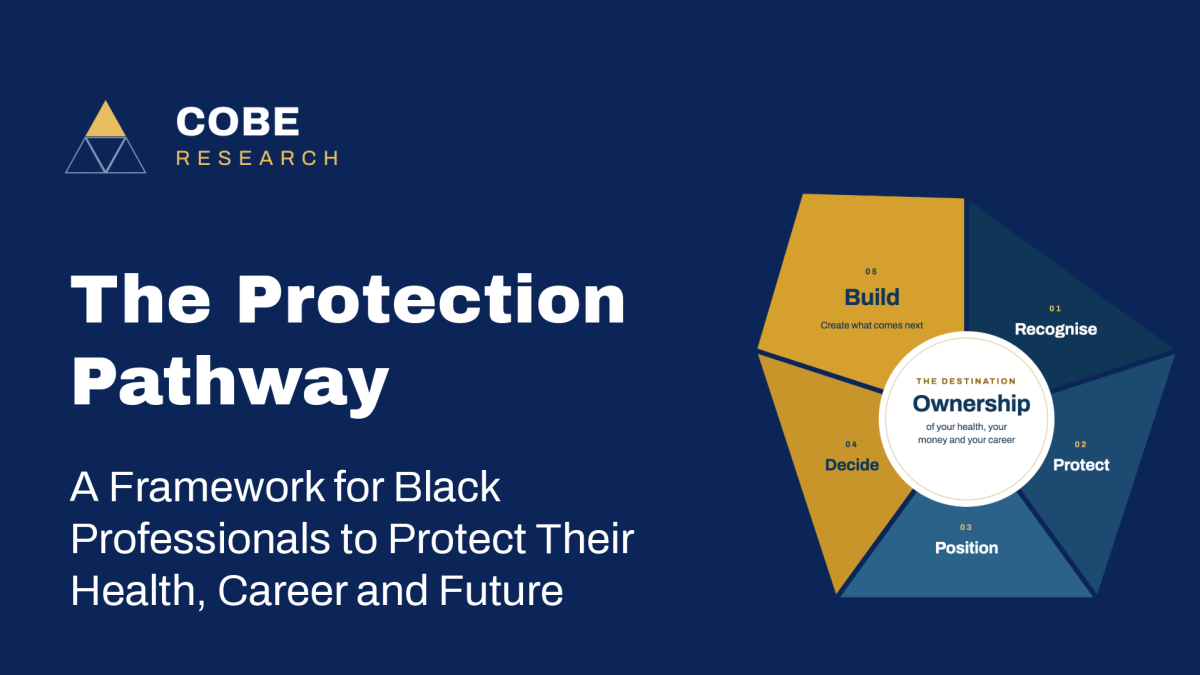
Discover the Protection Pathway
For many Black professionals, the question is no longer simply, “How do I progress in my career?”
A more important question often sits underneath it:
What is this career costing me, and what do I want my working life to look like from here?
The Protection Pathway™ grew from this question.
My research into the Cost of Black Excellence has shown me how easily career success becomes tied to endurance. People learn to work harder, prove themselves repeatedly, manage how they are perceived, and keep going through environments that are taking more from them than they realise.
When this continues for years, the issue is bigger than career progression.
- Health matters.
- Energy matters.
- Financial security matters.
- Choice matters.
The Protection Pathway™ provides a way of thinking about all of them.
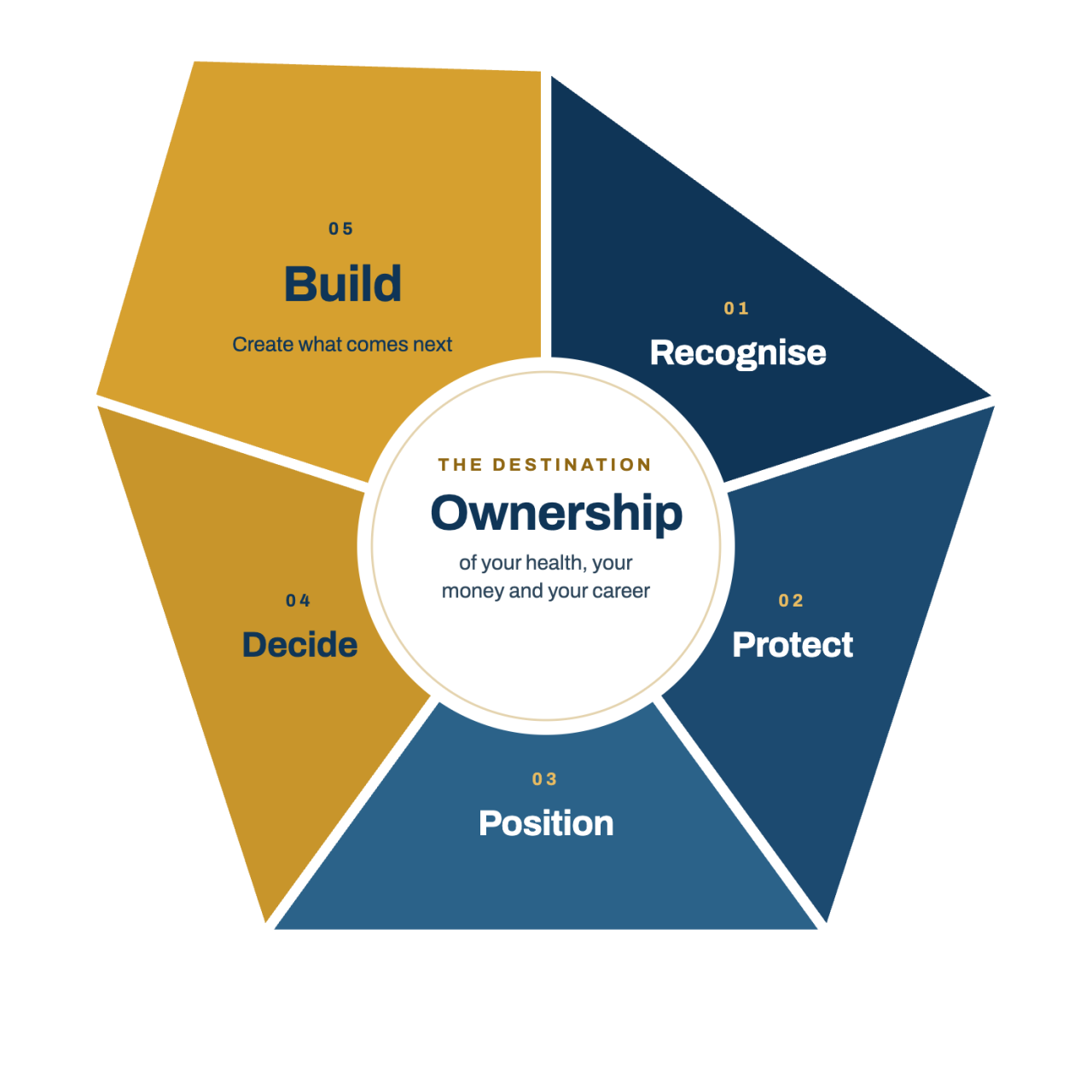
The pathway moves through five stages:
This is not about telling Black professionals to leave corporate life. Nor is it about suggesting entrepreneurship as the answer for everyone.
It is about reaching a position where fear, exhaustion, or financial dependency are no longer making your career decisions for you.
Recognise: Understand what is happening
The first stage is recognition.
Many Black professionals know something feels wrong long before they have language for what they are experiencing.
You might notice yourself working harder than colleagues.
You might have impressive qualifications but still find your competence questioned.
You might find yourself preparing extensively for meetings because you know people will remember mistakes.
Perhaps you have spent years delivering good work while watching other people receive sponsorship, visibility and opportunities.
You might be succeeding professionally while becoming increasingly exhausted privately.
Without a framework, these experiences are easy to individualise.
This is where the Excellence Taxes™ become useful.
They provide language for examining three different forms of workplace pressure.
Recognition changes the question.
Instead of asking only, “What is wrong with me?”, you start asking:
What is happening here?
That is an important shift.
You cannot make a good career decision about something you have not yet named.
Protect: Protect your health, energy, and finances
Recognition is not enough.
Once you understand the pressure, the next question becomes:
What do I need to protect?
For me, there are three important areas:
These are often the resources people sacrifice while trying to preserve their careers.
Protection might mean working with a therapist.
It might mean working with a trauma-informed coach.
It might mean recognising the physical signs of chronic workplace stress before reaching burnout.
For someone else, protection might involve setting firmer boundaries around working hours, stopping unpaid emotional labour or becoming more selective about which workplace battles deserve their energy.
Financial protection matters too.
Sometimes people remain in damaging environments because leaving feels financially impossible.
Financial protection therefore involves understanding your numbers.
Protection is not necessarily withdrawal.
It is about reducing vulnerability.
When your health is deteriorating, your energy is depleted and your finances leave you with no options, career decisions become much harder.
The aim is to create enough capacity to think again.
Position: Strengthen your career position
Once you have begun protecting yourself, the next stage is positioning.
The question changes from:
How do I survive this workplace?
to:
How do I strengthen my position?
Positioning might happen within your existing organisation.
You might need more visibility for your projects and ideas.
You may want to get sponsorship rather than another mentor.
You will need to document your achievements effectively, so you have a portfolio of evidence to showcase to future employers or to get investment in your ideas.
You might need to negotiate your salary so that you're more comfortable and not resenting your hard work for low compensation.
Think about how you can build relationships with senior decision-makers that will impact your career positively.
You might need to stop taking on work that creates responsibility without progression.
Positioning might also involve looking beyond your employer.
Your professional knowledge has value outside your job description.
This does not mean everyone needs a side hustle.
It means your employer does not have to remain the sole holder of your economic future.
Positioning creates options.
Decide: Make an informed career decision
Many people try to make career decisions when they are exhausted.
That is one reason the order of the Protection Pathway matters.
Recognition comes first. Protection follows. Positioning strengthens your options. Then you decide.
At this stage, the questions become much bigger than:
Should I resign?
The answers will differ from person to person.
The objective is not to produce one answer.
The objective is to make the decision from a stronger position.
There is a significant difference between leaving because you are depleted and choosing a different direction because you have examined your health, finances, opportunities and ambitions.
Build: Create what comes next
The final stage is Build.
Once you have created space to make a conscious decision, you start designing the next phase.
For one person, Build might mean becoming an executive.
For another, it might mean starting a consultancy.
Someone else might want to move into non-executive board work.
Another person might decide that they want a stable career while building wealth through property or investments.
Someone might develop a business alongside employment before moving into entrepreneurship later.
Others will create several income streams because they no longer want their financial security tied to one employer.
And some people will decide that what they want is simpler: meaningful work, good health, enough money and more time.
Build is not synonymous with becoming an entrepreneur.
It means creating a working life that reflects what matters to you now.
That distinction matters.
Success at 45 does not have to look like the success you were pursuing at 25.
The destination is ownership
At the centre of the Protection Pathway™ is one word:
For years, many professionals build careers around being selected.
Selected for promotion. Selected for leadership. Selected for development. Selected for high-profile projects. Selected for sponsorship.
The Protection Pathway asks a different question:
What happens when you start building enough protection, positioning and economic power to select for yourself?
You start deciding which organisations deserve your labour.
You start deciding which opportunities support the life you are building.
You start deciding how much of yourself you are prepared to exchange for career progression.
You start thinking beyond the next job title.
That is where career planning begins to become life planning.
This is the work I want COBE Elevate to support
This is also why I see COBE Elevate as more than a professional community.
Each part of the community should help Black professionals move through the Protection Pathway.
We need spaces where we learn to recognise workplace pressure.
We need access to conversations about burnout, trauma, boundaries and recovery.
We need financial education.
We need career strategy.
We need conversations about sponsorship, progression and negotiation.
We need examples of portfolio careers, consulting, entrepreneurship and board careers.
And we need to hear from people who have made different choices rather than presenting one version of professional success.
The aim is not to encourage thousands of Black professionals to leave their jobs.
The aim is to help thousands of Black professionals reach a position where they have genuine choices.
Because there is an enormous difference between staying somewhere because you have no alternative and staying because you have decided that the opportunity still serves you.
That is what the Protection Pathway™ is designed to create.
Continue on the pathway
Categories: : Career decision making, The Excellence Tax, Workplace Wellbeing