The Excellence Tax, What Is Success Costing You?
 Natasha Williams
Explore the Excellence Tax™ and how continual proving, stalled progression, and workplace pressure affect Black professionals.
For many Black professionals, success comes with a second job that nobody included in the job description.
You do the work you were employed to do, but you also manage everything that surrounds the work. You think carefully about how you speak in meetings, prepare extensively because you don't want your competence questioned, notice who gets the benefit of the doubt, and consider whether challenging something is worth the possible consequences.
You might also watch colleagues move into opportunities you believed your performance had already earned.
Somewhere between doing your job and managing everything around it, work becomes heavier than it should be.
This is what I call The Excellence Tax™.
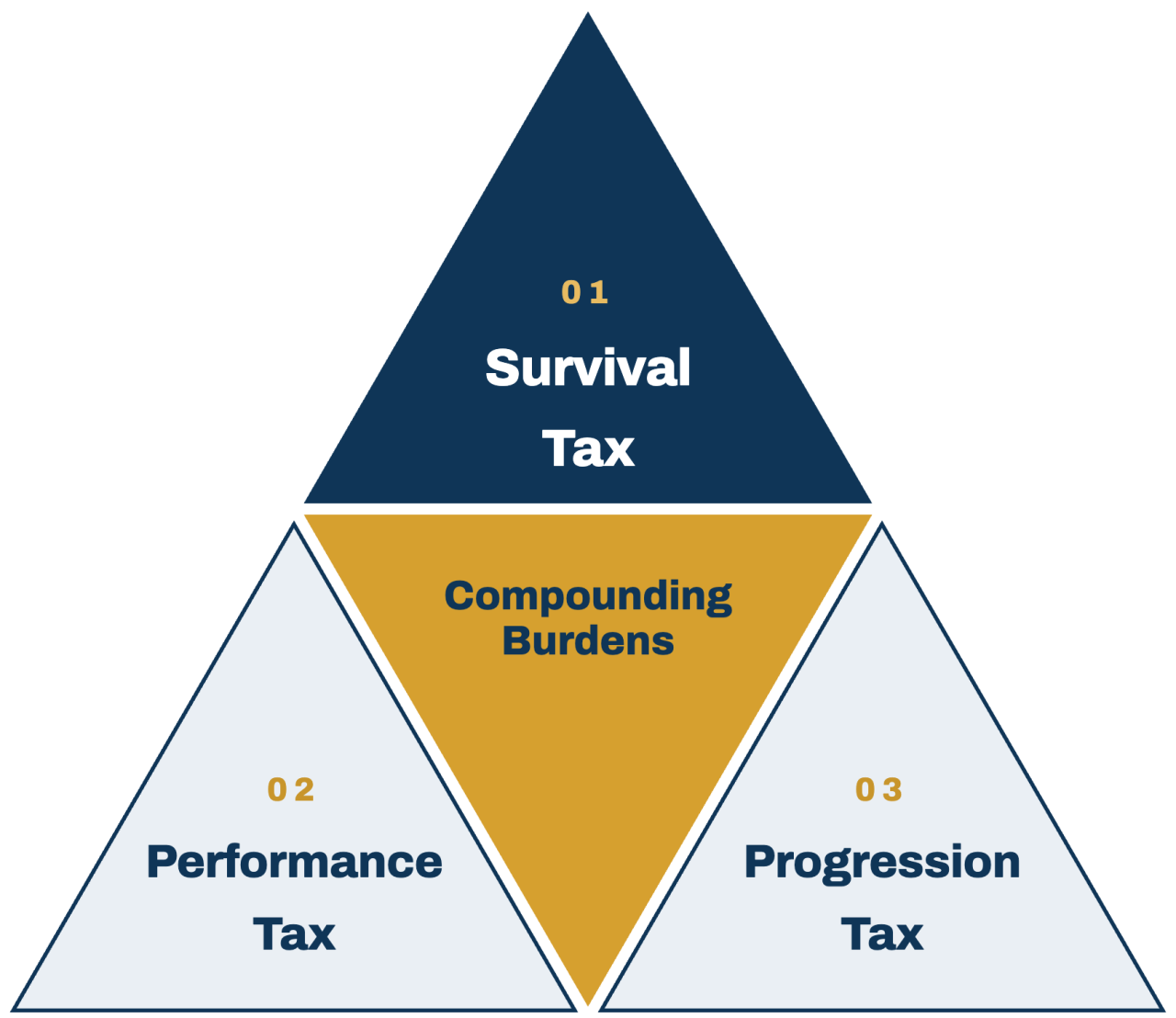
The Excellence Tax™ describes the additional psychological, emotional, and career burden that Black professionals often carry while succeeding at work.
The important question is not whether Black professionals have enough resilience to cope with these pressures. Many have built successful careers while carrying pressures that remain invisible to the people around them.
A more useful question is this: What is your success costing you, and what do you want to do once you recognise the cost?
That second question is important because recognition by itself does not create change.
This is why I developed The Protection Pathway™.
The Protection Pathway™ moves through five connected stages: Recognise, Protect, Position, Decide and Build. The destination is greater ownership of your health, your money and your career.
Success should not require continual proving.
Many of the Black professionals who contributed to the Cost of Black Excellence research were successful by conventional measures. They were educated, experienced, ambitious, and committed to their careers.
Many had spent years doing what professionals are told will lead to success. They worked hard, developed expertise, gained qualifications, delivered results, and built strong professional reputations.
Yet their accounts repeatedly described another experience.
They felt they had to keep proving themselves.
One achievement did not always settle the question of competence. A qualification did not necessarily remove scrutiny. Strong performance did not always translate into progression, and experience did not automatically lead to greater trust.
For some professionals, the audition never seemed to end.
Continual proving carries a cost because it changes the way you work.
When you believe that a mistake will be judged more harshly, you prepare differently. When you suspect that your competence is under greater scrutiny, you work differently. When you know that your behaviour might be interpreted through stereotypes, you communicate differently.
Eventually, success stops being measured only by what you achieve. You also begin measuring success by how much of yourself you have to spend achieving it.
The Excellence Tax™ helps you identify what you are carrying.
The Excellence Tax™ describes the accumulated cost of succeeding in environments where Black professionals experience additional pressure to prove competence, manage identity, protect themselves, and progress.
Through my research, I have grouped much of this experience into three interconnected pressures: the Performance Tax™, the Progression Tax™ and the Survival Tax™.
The Performance Tax™ describes the pressure to outperform, overprepare, or continually demonstrate competence in order to receive confidence, credibility, or recognition.
The Progression Tax™ appears when strong performance does not translate into equivalent access to sponsorship, visibility, opportunity, promotion or senior leadership.
The Survival Tax™ describes the personal cost of remaining functional within those conditions, including vigilance, emotional restraint, identity management, exhaustion and the health effects associated with prolonged workplace pressure.
These pressures often reinforce one another.
A professional who feels that their competence is being questioned might work harder. Working harder might produce stronger results without producing greater progression. The absence of progression might then encourage them to push themselves even further.
Over time, the combined pressure might begin affecting sleep, energy, confidence, relationships and health.
From the outside, this pattern might look like ambition. From the inside, the same experience might increasingly feel like survival.
This is where the first stage of the Protection Pathway™ begins.
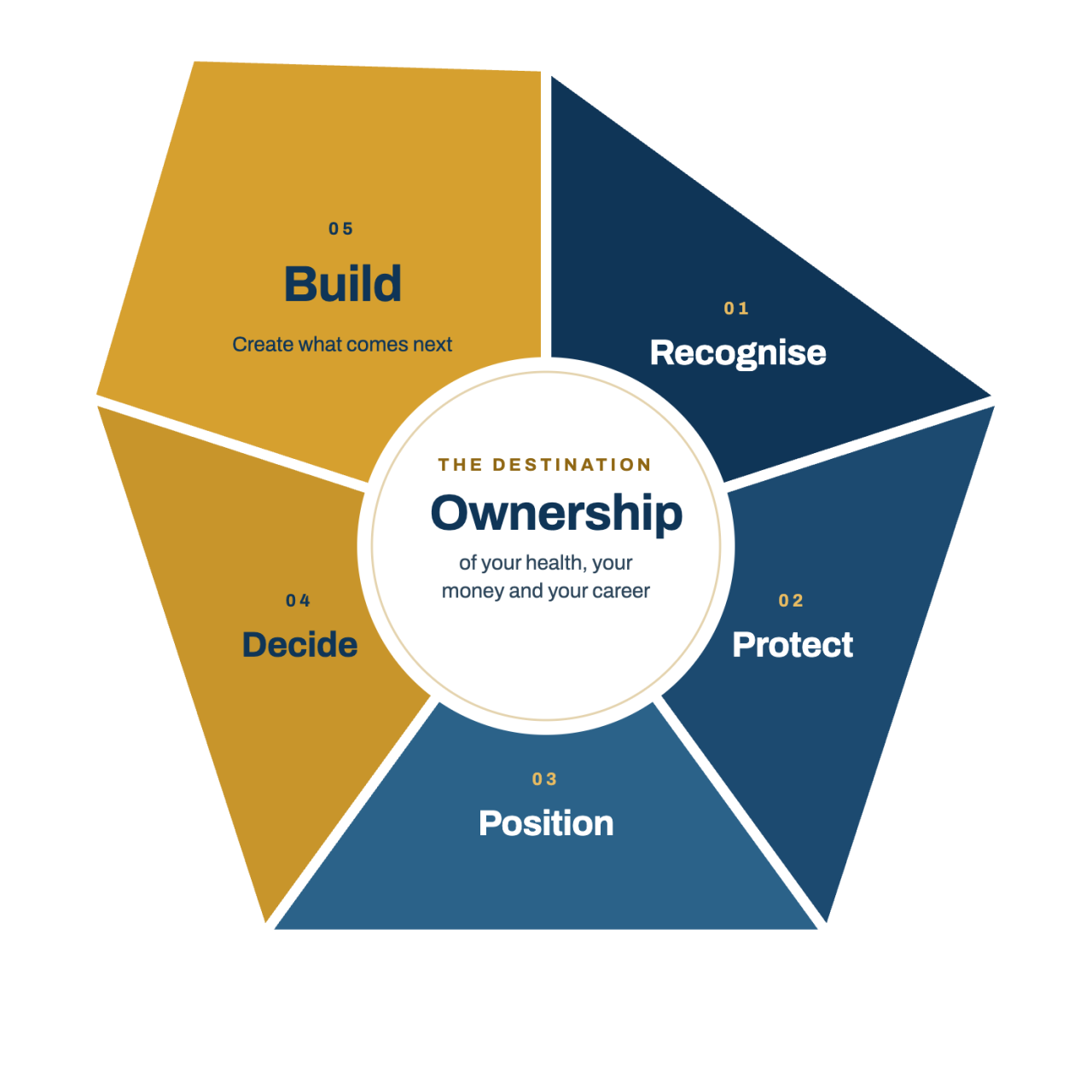
The first stage is to recognise what is happening.
You cannot make an informed decision about something you have not yet identified.
Recognition gives you a framework for examining your workplace experiences without automatically interpreting every problem as a personal failure.
Instead of repeatedly asking what you are doing wrong, you begin asking what is happening around you.
You might start examining whether you are being required to prove yourself repeatedly, whether strong performance is translating into opportunity, and whether increased responsibility is bringing greater authority, reward, or progression.
Consider whether you have mentors but lack sponsors, whether you are constantly managing how you speak or express disagreement, and whether work has started affecting your sleep, health, confidence, or relationships.
You might also notice that you think about leaving regularly, even though you have invested many years in building your career.
Recognition does not mean attributing every difficult workplace experience to race. One missed promotion does not establish a pattern, and one difficult manager does not define an entire organisation.
The important issue is repetition.
When the same pressures keep appearing, it becomes useful to examine what those patterns are requiring from you.
The Performance Tax™ appears when proving yourself never seems to end.
Many Black professionals recognise the experience of entering a new role and wanting to establish credibility quickly.
The difficulty begins when the requirement to prove yourself continues long after your competence should have been established.
You deliver successfully, yet still feel that you must demonstrate competence again. You prepare extensively for meetings because you expect greater scrutiny. You hesitate before contributing because you believe mistakes will be remembered, and you sometimes accept additional work because saying no feels riskier for you than it appears to be for colleagues.
Over time, excellence begins functioning as a form of protection.
This kind of over-performance often receives praise. You become known as dependable, capable and willing to handle difficult projects.
Recognition, though, is not the same as reward.
Being relied upon is not the same as being sponsored. Receiving more work is not the same as receiving greater authority. Being described as invaluable is not the same as being promoted.
Eventually, you need to ask an important question: Am I being rewarded for my excellence, or am I being required to maintain exceptional performance simply to remain credible?
The Progression Tax™ appears when performance stops converting into opportunity.
Most professionals expect some relationship between contribution and career progression.
The relationship will never be perfect, but strong performance should create some movement towards opportunity.
For many Black professionals who contributed to the research, this connection had weakened.
Some described watching colleagues progress while questioning what more they themselves needed to demonstrate. They had qualifications, years of experience, and strong performance records. Some were already carrying responsibilities associated with the role above them.
Yet the next opportunity remained out of reach.
Working hard towards a goal is one experience. Working hard without knowing whether the rules governing progression are being applied equally creates a different kind of exhaustion.
This is where sponsorship becomes especially important.
Mentors usually provide advice, while sponsors advocate for you when you are not in the room. Sponsors introduce your name into conversations about opportunities, recommend you to influential decision-makers, and attach their own credibility to your potential.
Career planning therefore needs to extend beyond performance.
You need to understand who knows the quality of your work, who speaks about you when you are absent, who connects you with opportunities, and who has influence over decisions affecting your career.
Strong performance matters, but strong positioning matters as well.
This distinction becomes increasingly important as you move through the Protection Pathway™.
The Survival Tax™ becomes visible when work starts following you home.
The most serious cost of the Excellence Tax™ is often the one that never appears on a CV or performance review.
Your body keeps a record of pressures that your professional achievements do not show.
Within the Cost of Black Excellence research, professionals described experiences including sleep disturbances, persistent fatigue, burnout, and emotional collapse.
Workplace pressure also travelled home with them.
A meeting might finish, but the conversation continues in your mind. You might question whether you were too direct, whether you should have challenged a comment, whether staying silent was the right decision or whether your manager's response meant something more than was said.
You might even begin questioning whether the pattern you are experiencing is real.
This constant processing consumes energy.
Code-switching consumes energy. Monitoring how you are perceived consumes energy. Suppressing frustration consumes energy, and repeatedly preparing yourself for interactions that leave you feeling diminished consumes energy.
Over time, the cost begins appearing in your sleep, relationships, concentration, confidence, motivation, physical health and capacity to recover.
Many professionals recognise burnout only after functioning becomes difficult, even though the warning signs often appear much earlier.
You might notice that Sunday anxiety is becoming stronger, that meetings require longer recovery, or that you have stopped contributing ideas in spaces where you once felt confident.
You might become emotionally detached from work that once mattered to you, or you might begin fantasising about leaving without knowing where you want to go next.
Sometimes you take a holiday believing that rest will solve the problem, only to return to work and feel exhausted again within days.
At this stage, the answer should not automatically involve working harder.
The working environment deserves examination, and the second stage of the Protection Pathway™ becomes increasingly important.
The second stage is to protect your health, energy and finances.
Recognition provides information, while protection helps you respond to what you have learned.
Before making a major career decision, it is useful to ask what needs protecting before the situation takes more from you.
I place three areas at the centre of this stage: your health, your energy and your finances.
Protecting your health might involve speaking with a therapist, working with a trauma-informed coach or seeking appropriate professional support when prolonged workplace stress is affecting your wellbeing.
Protection might also involve recognising chronic stress patterns before they develop into more serious exhaustion.
Your energy requires protection as well.
You might need firmer boundaries around working hours, a clearer distinction between work and home, or a more deliberate approach to additional responsibilities.
You might also need to decide which workplace battles deserve your energy and which ones no longer deserve access to it.
Financial protection belongs within this stage because financial dependence often shapes career decisions.
Some professionals remain in damaging environments because leaving feels financially impossible.
Understanding your financial position gives you more information from which to make choices.
You might need to understand your monthly baseline, build an emergency fund, reduce financial commitments or develop enough savings to create several months of breathing space.
You might also consider whether an additional income source would reduce your dependence on one salary.
Protection does not automatically mean leaving your job.
Protection means reducing vulnerability so that exhaustion, fear or financial pressure do not make the decision for you.
The third stage is to strengthen your career position.
Once you have started protecting yourself, the next question changes.
Instead of asking only how you can survive where you are, you begin asking how you can strengthen your position.
Positioning might take place inside your current organisation.
You might need greater visibility, stronger relationships with decision-makers, better documentation of your achievements or clearer conversations about progression.
You might need sponsorship rather than another mentor.
You might also need to stop accepting responsibilities that increase your workload without increasing your authority, reward or career prospects.
Sometimes positioning requires looking beyond your current organisation.
A different team might offer greater opportunity. Another employer might value your experience differently, or a sideways move might position you more effectively than the promotion you have spent years pursuing.
Positioning can also involve developing opportunities outside permanent employment.
Your knowledge might have value as a consultant, teacher, speaker, writer or adviser.
You might decide to join a board, develop a small business alongside employment or move towards a portfolio career.
Some people might choose to work four days each week and use the remaining day to develop another professional or commercial interest.
This does not mean that every Black professional needs a side business.
The purpose is to increase choice.
Your employer does not need to remain the sole holder of your professional or financial future.
The fourth stage is to make your decision from a stronger position.
Many major career decisions happen after someone has already reached exhaustion.
The order of the Protection Pathway™ is designed to reduce the likelihood of reaching that point without options.
You first recognise what is happening, then protect important resources and strengthen your position before making a major decision.
At this stage, the question becomes broader than whether you should resign.
You might decide to stay because the organisation still offers enough opportunity, support and psychological safety for you to build the career you want.
You might decide to challenge a situation because greater transparency, stronger boundaries or a formal conversation has the potential to improve your experience.
You might reposition yourself by changing teams, organisations, sectors or ways of working.
You might also decide to leave because the cost of remaining has started to exceed what the opportunity gives back.
These four responses of staying, challenging, repositioning or leaving already sat within my thinking about the Excellence Tax™.
The Protection Pathway™ places those decisions within a wider process of understanding, protection and preparation.
Before deciding, you might ask whether you still want the career you have spent years building, or whether you want the same profession in a different organisation.
You might consider whether a sideways move would serve you better than another promotion, whether you need sponsorship, or whether consultancy would suit you better than permanent employment.
You might decide that part-time employment would create enough space to build another income source.
You might realise that you want a portfolio career, or that the problem is not your employer at all because you are ready to leave the profession itself.
One of the most important questions is whether you are still pursuing your next promotion because you want it, or because you have spent so many years trying to prove that you deserve it.
There is an important difference between leaving because exhaustion has made staying impossible and leaving because you have assessed your circumstances and decided where you want to go next.
The Protection Pathway™ is designed to create more space for the second kind of decision.
The fifth stage is to build what comes next.
Once you have made a conscious decision, you can begin building the next stage of your working life.
For one person, building might mean pursuing executive leadership within their profession.
For another person, building might mean developing a consultancy, moving into board work or combining employment with independent work.
Someone else might decide to retain a stable career while building wealth through property, investments or another source of income.
Another professional might develop a business while remaining employed and move towards entrepreneurship over several years.
Other people might create several income streams because they no longer want their financial security to depend entirely on one organisation.
For some people, the next stage might be simpler. They might want meaningful work, a reasonable income, good health and more control over their time.
The Build stage is therefore not synonymous with entrepreneurship.
Building means creating the next stage of your working life with greater intention.
Success at 45 does not have to resemble the version of success you pursued at 25.
Your priorities change as your life changes. Your tolerance for unnecessary pressure might also change, and your understanding of what you want from work might become clearer.
Your career strategy should have enough flexibility to change with you.
The destination of the Protection Pathway™ is greater ownership.
At the centre of the Protection Pathway™ is the idea of ownership.
The aim is to develop greater ownership of your health, your money, and your career.
Many professional careers are built around being selected by somebody else.
You wait to be selected for promotion, leadership, development opportunities, important projects, sponsorship, and access to decision-making spaces.
The Protection Pathway™ introduces another question: What changes when you build enough protection, positioning, and financial strength to begin selecting careers, jobs or entrepreneurship for yourself?
You begin deciding which organisations deserve your labour and which opportunities support the life you are trying to build.
You begin considering how much of yourself you are prepared to exchange for progression.
You begin thinking about the type of work you want to be doing five years from now, how much control you want over your time, what you want your income to depend upon and what you want your career to give back to you.
These questions move beyond surviving work.
They start a wider conversation about ownership.
Becoming accustomed to the Excellence Tax™ makes recognition harder.
One of the difficulties with the Excellence Tax™ is that many professionals have paid it for so long that the behaviours associated with it begin to feel normal.
Overpreparing starts to feel like ordinary professionalism, while remaining quiet starts to feel like good career strategy.
Working significantly harder begins to feel responsible, and ignoring exhaustion begins to look like ambition.
Being overlooked becomes another experience you promise yourself you will overcome next year.
You adapt successfully, which means the people around you might never recognise the cost.
Eventually, you might stop recognising the cost yourself.
High performance does not automatically mean healthy performance.
You might still be meeting deadlines, delivering results, receiving praise and appearing composed while paying a price that has become increasingly difficult to sustain.
Recognition helps you interrupt this pattern.
Protection helps you preserve the resources that matter.
Positioning increases your options.
Decision-making allows you to choose from a stronger position.
Building gives you somewhere meaningful to move towards.
Together, these stages form the Protection Pathway™.
Your career should give something meaningful back to you.
Most meaningful careers require effort and involve periods of pressure, disappointment and difficult professional relationships.
The important question is whether the exchange remains reasonable.
Your career should provide income, development, opportunity, professional confidence, relationships, purpose and greater choice over time.
It should also leave you in a stronger position for your next move.
When the cost of remaining consistently exceeds what your role gives back, something deserves to change.
This question is especially important for Black professionals who have learned, directly or indirectly, that the answer to workplace barriers is to become even better.
The response becomes another qualification, another late night, another stretch assignment or another year spent proving your value.
Eventually, the central question needs to change.
Instead of asking what else you need to prove, you begin asking: What is this environment requiring from me, and is the price still worth paying?
The Protection Pathway™ then introduces a further question: If the current arrangement no longer works for me, what do I want to build next?
Understanding the cost gives you a stronger starting point for change.
The Cost of Black Excellence research grew from listening to Black professionals describe the gap between how successful their careers appeared from the outside and what those careers were costing them internally.
Those experiences require more than another conversation about resilience.
We need to recognise workplace pressures and understand the patterns behind them.
We also need to protect health, energy and financial security before those resources become depleted.
We need to strengthen our professional positions so that remaining in an organisation is a choice rather than an obligation.
We need enough space to make informed decisions about whether to stay, challenge, reposition or leave.
After making those decisions, we need to think seriously about what we want to build next.
This is the relationship between The Excellence Tax™ and The Protection Pathway™.
The Excellence Tax™ helps you understand what might be happening and what the experience is costing you.
The Protection Pathway™ helps you decide what you want to do with that knowledge by moving through the stages of Recognise, Protect, Position, Decide and Build.
The destination is greater ownership of your health, your money and your career.
Where are you on the Protection Pathway™?
If parts of this article reflect your own experience, the first step is to understand what is happening before deciding what to do next.
You can begin by downloading The Excellence Tax™: What Is Success Costing You?, which explores the pressures identified through the Cost of Black Excellence research and helps you consider where the greatest costs might be appearing in your own working life.
From there, The Protection Pathway™ provides a structure for thinking about what needs protecting, how you might strengthen your position, which decisions are now available to you and what you want to build next.
Your next move does not need to begin with leaving your job. It begins with understanding what is happening, protecting what matters and building enough choice to decide what comes next.
Categories: : Career & Work
The Cost of Black Excellence™
What is success costing you?
Many Black professionals are succeeding at work while carrying pressures that remain largely unseen.
Download The Excellence Tax™: What Is Success Costing You? to explore the research into continual proving, identity management, workplace pressure, burnout and the personal cost of professional success.
Download the Report →Research and practical insight for Black professionals making informed decisions about work, wellbeing and career.